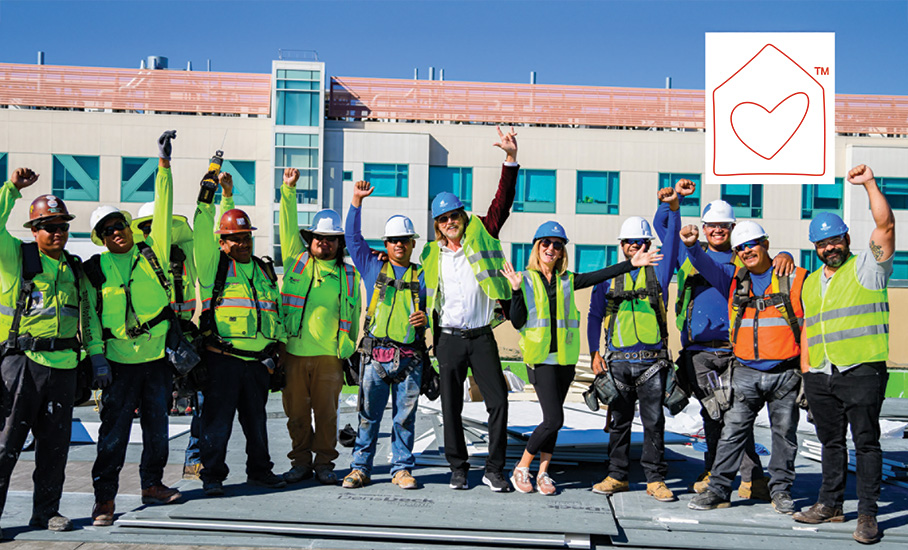
Roofing contractor faces $752,846 in proposed penalties

The Department of Labor has cited Elo Restoration LLC, Jacksonville, Fla., for exposing workers to dangerous fall hazards after a worker fell through a skylight on a residential roof, according to the Occupational Safety and Health Administration. The contractor is not an NRCA member.
On March 18, OSHA began investigating a Jacksonville site where Elo Restoration was working; the company operates as Elo Roofing. Two weeks later, OSHA began another investigation at the company’s job site in St. Johns, Fla., after learning a worker required hospitalization from falling through a residential roof while removing skylight fixtures.
OSHA determined the company did not install guardrails, safety nets or personal fall-arrest systems at the worksite and did not provide employees with alternative fall-protection measures.
Elo Restoration was cited with four willful, three repeat, a serious and two other-than-serious citations, totaling $752,846 in proposed penalties.
Falls are the leading cause of death in the construction industry. Learn how to reduce roofing-related injuries and deaths with NRCA’s safety resources available at nrca.net/safety.
Virginia Tech releases rating system for hard hats and helmets
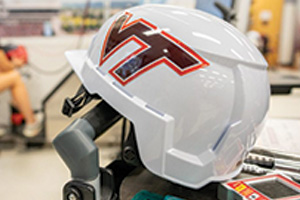
Virginia Tech’s Helmet Lab has released a rating system for construction hard hats and helmets similar to the system used for sport helmets, according to Construction Dive.
The findings indicate Type II helmets, which have interior energy-absorbing materials and protection for the top and sides of the head, better protect workers from severe injury, reportedly reducing risk by 34% on average for fall-related concussion and by 65% for skull fracture.
The research began in 2024 and simulated real-world collisions to assess how a helmet or hard hat protects a worker. The team attempted to recreate 14- to 25-foot falls.
“You do everything you can to avoid hitting your head first,” says Barry Miller, director of outreach for Virginia Tech’s Helmet Lab. “That meant 14- to 25-foot falls create impacts similar to plunging from 5 to 7.5 feet. That’s a lot higher than the industry standard of testing 2-foot drops.”
The lab created a one- to five-star ranking for 17 helmets, Type I and Type II. The scale includes ratings for predicted incidence of skull fractures and concussions compared with the average Type I helmet. Of the nine Type II helmets on the list, two have three stars, but the remaining seven have five stars. The highest-ranked Type I helmet has four stars, but most have one or two stars.
According to the Helmet Lab website, four- and five-star-rated helmets are recommended for workers exposed to fall hazards.
Study shows how overuse injuries affect workers

Overuse injuries on the job can lead to elevated inflammation levels, mood changes and chronic pain, results of a recent study at Temple University, Philadelphia, show.
A team led by researchers trained a group of rats to reach and pull a lever for a food reward until they reached 55% of their maximum voluntary pulling force. The rats were then placed into two groups. One performed high-repetition, low-force tasks for six weeks with a goal of four reaches per minute at 15% of maximum pull while the other group rested.
Findings show certain cytokines, a type of signaling protein, increased 200% to 500% in the flexor muscles, forearm bones and median nerves of the repetitive reach group. Those tasks “triggered a multilevel inflammatory cascade” that matched lasting pain-like and sickness behaviors.
By week six, the rest group had partially recovered from losing about 20% of baseline grip force, but grip weakness remained. The task group remained 25% weaker than the rest group.
The researchers see the rise in inflammation as the link to weakness, hypersensitivity, fatigue and social withdrawal that workers often report after overuse injuries. They recommend therapies, which can accelerate the rehabilitation process, limit sick leave and lower the costs of work-related musculoskeletal disorders.
The study was published in the journal Frontiers in Physiology.
Bill would require commercial drivers to read and speak English
Under legislation recently introduced in the Senate, commercial driver’s license holders would be placed out of service for an inability to “read and speak the English language sufficiently,” according to Safety+Health magazine.
Language skills included in the legislation, sponsored by Sen. Cynthia Lummis (R-Wyo.), match those listed as a general qualification for drivers under 49 CFR 391.11(b)(2):
- Converse with the general public
- Understand highway traffic signs and signals in English
- Respond to official inquiries
- Make entries on reports and records
Rep. Dave Taylor (R-Ohio) introduced a similar bill in the House of Representatives in May. The legislation would codify President Trump’s executive order mandating drivers be placed out of service for failing an English proficiency test involving a driver interview and an assessment of highway traffic sign recognition.
A recent study by researchers from the University of Tennessee, Knoxville, shows motor carriers with English proficiency violations had an average safety rating of 6.23 on the Federal Motor Carrier Safety Administration’s Safety Measurement System. Carriers without such violations had an average score of 1.32.