Recycling numbers up from 2024
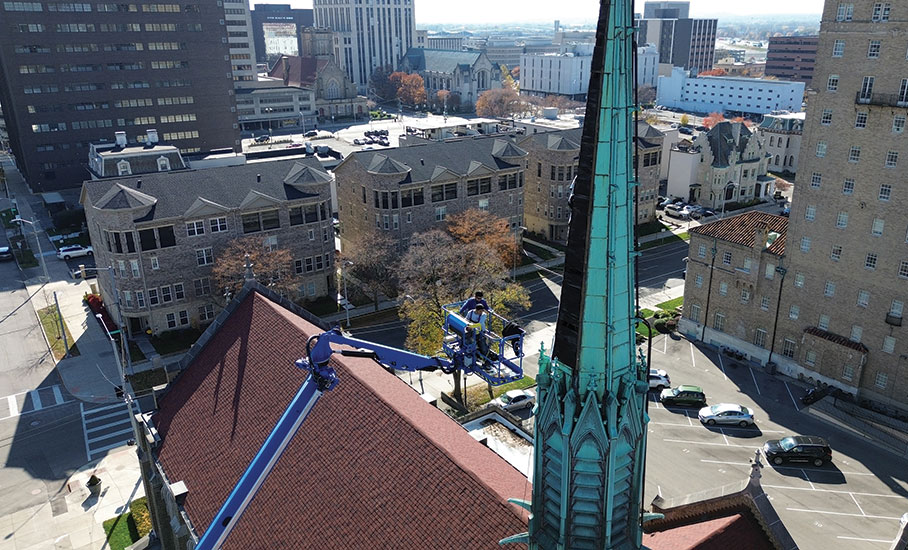
During 2025, nearly 30 million pounds of pre-consumer PVC and more than 7 million pounds of post-consumer PVC single-ply roof membranes were recycled, according to Recyling Today, a media brand covering the global recycling industry. In 2024, those numbers were at 22.8 million and 2.9 million pounds, respectively.
The 2025 figures demonstrate a 30% gain in pre-consumer recycling and progress toward reducing production waste and boosting material recovery.
The Coated Fabrics and Film Association-Vinyl Roofing Division has expanded its recycling efforts on two fronts: Pathway to Zero for pre-consumer materials, putting more than 99.5% of production scrap back into raw materials; and Pathway to Circularity for post-consumer materials, where recycling success depends on coordination across the full project lifecycle. Pathway to Clarity focuses on educating recycling stakeholders about how to recycle PVC roofing and creating support materials to make doing so easier.
Industry best practices have reintegrated production trimmings and scrap back into manufacturing. Post-consumer recycling has been active for more than two decades, and the industry’s Pathway to Circularity initiatives are driving faster, broader adoption across pre- and post-consumer streams.
To learn more, visit the “Recycling” tab on vinylroofs.org.
Global CO₂ reduction enabled by BACnet®
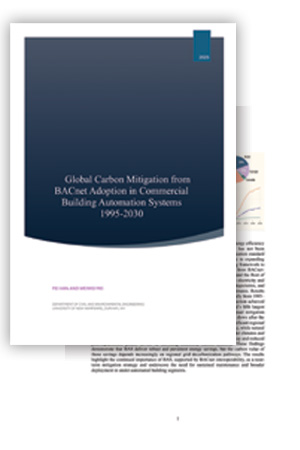
ASHRAE has released a new study from the University of New Hampshire, Durham, that quantifies the global climate impact of BACnet.
BACnet is the global data communication protocol for Building Automation and Control Networks. Developed by ASHRAE, it allows building systems including HVAC, lighting, lifestyle safety and other systems to communicate and cooperate, driving the efficiency of the modern built environment.
The study from University of New Hampshire reveals BACnet-enabled building automation systems have mitigated 1.4 billion tons of CO₂ since 1995. This is equivalent to removing 300 million cars from the road for one year or offsetting the entire annual emissions of Japan. The research highlights BACnet’s role as a catalyst for smart building adoption worldwide.
“This study clearly shows the power of smart buildings and the critical role BACnet plays in reducing global carbon emissions,” says ASHRAE President Bill McQuade, P.E., CDP, Fellow ASHRAE, LEED AP. “For nearly three decades, BACnet’s open interoperable framework has enabled building owners and operators to optimize energy use, improve efficiency and deliver measurable climate impact.”
Projections indicate BACnet systems could help avoid 2.06 billion tons of CO₂ by 2030, underscoring the critical role of smart, connected building technologies in achieving global sustainability goals.
To see the full study, visit ashrae.org/freeresources.
Taking AI to construction

North America’s Building Trades Unions and Microsoft have teamed up to deliver an AI training program for construction trades workers nationwide, aiming to promote digital skills.
The program focuses on AI literacy, data security and practical applications, according to Construction Dive. It will help instructors create lesson plans and training materials more efficiently, as well as introduce job-site use such as code compliance and safety updates.
The initiative is designed to reach tens of thousands of workers through NABTU’s network of training centers with input from contractors to ensure the curriculum reflects real-world job-site needs.
“The training is structured in phases, beginning with security and basic AI literacy and moving into practical application,” says Tom Kriger, director of research and education at NABTU.
Early efforts have focused heavily on improving efficiency within apprenticeship programs. Instructors are trained to use AI tools to enhance administrative and teaching tasks. The idea is to reduce time spent on preparation and allow for more hands-on mentoring time, as well as increasing knowledge within job sites.