
One of the great lessons I learned during my career at NRCA is the impact one person with a great idea and a lot of passion can have on others.
In 2015, Charles Antis—a good friend and member of NRCA and the Roofing Alliance—and I were having regular conversations about the need to improve the roofing industry’s brand. Antis, founder and chief people awakener of Antis Roofing & Waterproofing Inc., Irvine, Calif., suggested a number of things we might do, most of which I politely told him I would think about.
Our conversations continued, and one day, Antis called to tell me he had just completed work on the Ronald McDonald House in Orange County, Calif., where he operates his roofing business. It was, he said, a great experience with a great organization and, as only Antis could do, suggested we “take care of all the Ronald McDonald House roofs in the country.”
In 2015, I was nearing retirement and had a pretty full plate already. But I also thought this could be a great project for NRCA’s foundation, the Roofing Alliance, and so began an amazing journey.
The journey begins
The first step in our proposed partnership was to get a reality check. I was able to arrange a meeting with the director of development for the Ronald McDonald House in Chicago. It turned out there were 165 free-standing Ronald McDonald Houses in the U.S. (there are now 167), and we agreed we would begin slowly, making sure our organizations were comfortable with one another and the Roofing Alliance could deliver value to the houses.
The first project we undertook was a complicated reroofing project for a house in the Chicago area. The roof was leaking; it included steep- and low-slope sections; and it was difficult to access. It was not the routine project we had hoped to have for our pilot project.
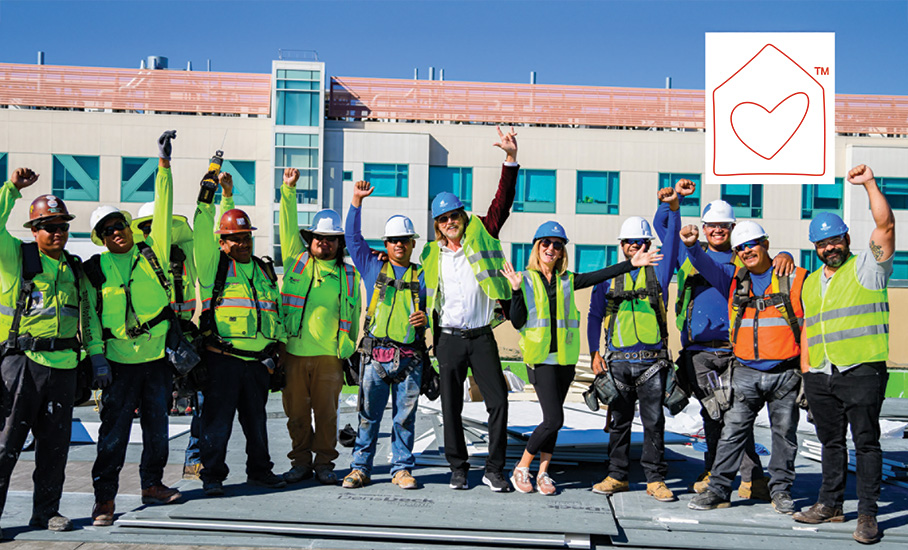
But Roofing Alliance members Ridgeworth Roofing, Frankfort, Ill., and Bennett & Brosseau, Romeoville, Ill., came through with the help of several local suppliers and Roofers Union Local 11. The roofing crew was so happy with the outcome they thought Ronald McDonald himself should see the finished project, so they carried the statue of him to the roof to celebrate. The house had a new roof at no cost, and our partnership with RMH was off and running.
The Roofing Alliance agreed to the following arrangement with RMH:
- The Roofing Alliance would identify a roofing contractor to “adopt” each roof of the 165 houses.
- The contractor would conduct an initial inspection of the house’s roof, provide annual maintenance and take care of minor repairs at no cost to the house.
- In the event of major repairs, reroofs or new houses, the Roofing Alliance would do its best to get materials and labor donated and/or discounted.
In early 2017, we announced the partnership arrangement through the RMH network and began the process of asking contractors to adopt the 165 roofs. In the ensuing months, I made a lot of phone calls to roofing contractors asking for their help. And not a single one refused.
I also made a lot of calls to individual Ronald McDonald Houses to explain the partnership and introduce them to their adopting contractor. Some of the house presidents I spoke with believed our arrangement was some kind of a scam (who offers free roofing help?) until the contactor showed up and did the initial inspection for free.
Philadelphia
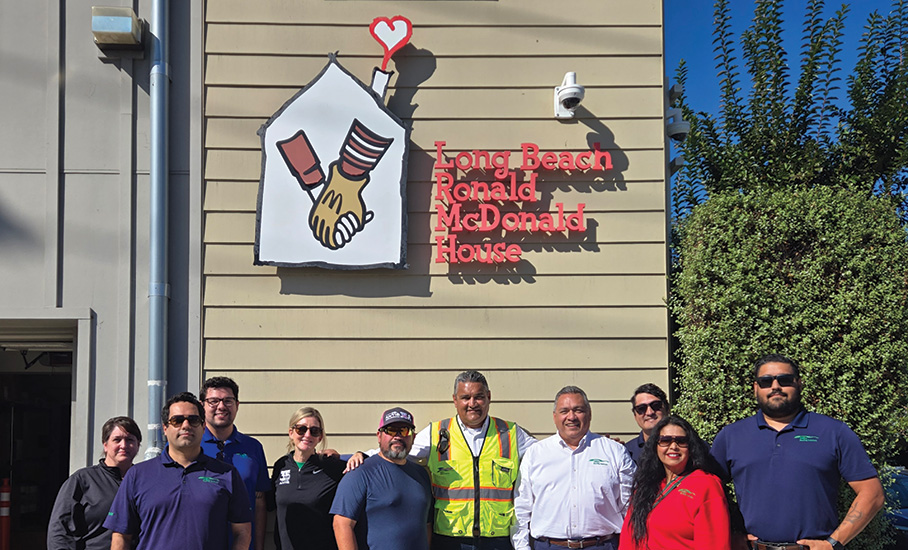
After the initial announcement, the first call we received was from the Ronald McDonald House in Philadelphia. This was significant because the idea for Ronald McDonald Houses started in the early 1970s when Philadelphia Eagles football player Fred Hill learned his daughter had leukemia. Hill and his wife organized a fundraising dinner to support the Leukemia and Lymphoma Society. It was a success, and they drove to New York to deliver a generous check to the society. On the way back, his wife said: “Well, that was nice. What should we do next year?”
With the support of many of his teammates, Hill asked the Eagles owner Leonard Tose to help with a fundraising plan for the local children’s hospital where Hill’s daughter was being treated. To his great credit, Tose suggested they ask the hospital what it needed most. The hospital came back with a list of 10 things, among them a place for the families of sick children to stay while their children were being treated. Tose agreed to help fund all 10 items on the list.
As it happened, the general manager of the Eagles, Jim Murray, was friends with the regional vice president of McDonald’s. When Murray asked his friend for help with the fundraising, he told Murray McDonald’s would help, but the house they were planning had to be named Ronald McDonald House. (A bit of trivia: The initial funding for the house came from 25 cents for every Shamrock Shake sold in that region.)
The first Ronald McDonald House was a five-bedroom house located near the Children’s Hospital of Philadelphia. During the years, a new house was built in Philadelphia, and by 2017, plans were made for a new $50 million house. When the house president learned of our partnership agreement, she was thrilled. We had hoped for a more modest beginning, but now we faced the challenge of helping the house get its million-dollar roof.
And up stepped a host of roofing industry folks to help. United States Roofing Corp., Norristown, Pa., was the contractor for the project and agreed to make a significant donation of labor, assisted by members of Roofers Local 30, who worked on Saturdays without pay. Materials were donated by Carlisle Construction Materials, Carlisle, Pa., and Amrize (Firestone Building Products at the time), Nashville, Tenn. The house saved more than $250,000 on its new roof.
A camp in LA
Not long after the Philadelphia house was completed, the Roofing Alliance had the opportunity to do some much-needed repairs on Camp Ronald McDonald for Good Times located in the hills above Los Angeles. The camp hosts children with cancer with no parents allowed (though with plenty of health care professionals) to give them the chance to be kids and be with other kids. The camp consists of several cabins, and at the time, all were old and had leaking roofs.
What transpired there was an amazing collaboration of big-hearted roofing professionals. Antis Roofing & Waterproofing; Shell Roofing Solutions Group, Chino, Calif.; and CI Services, Anaheim, Calif., donated the necessary labor for the project. GAF, Parsippany, N.J., and QXO (formerly Beacon Roofing Supply), Herndon, Va., donated all the materials.
It wasn’t long before word started to spread through the RMH community that our partnership was working. A number of houses got new roofs, including the following:
- Macon, Ga.: Donors L.E. Schwartz & Son Inc., Macon, and GAF
- Norfolk, Va.: Donors J.D. Miles & Sons Inc., Chesapeake, Va., and GAF
- Richmond, Va.: Donors Whitley/Service Roofing & Sheet Metal Group, Richmond, and Carlisle Construction Materials
- Minneapolis: Donors Garlock-French Roofing Corp., Minneapolis, and GAF
- Atlanta: Donor Carlisle Construction Materials
- St. Louis: Donors Amrize and Georgia-Pacific Gypsum, Atlanta
- Orange County, Calif.: Donors Antis Roofing & Waterproofing; IB Roof Systems, Grapevine, Texas; Georgia-Pacific Gypsum; and QXO
- San Diego: Donors Antis Roofing & Waterproofing, Shell Roofing Solutions Group, IB Roof Systems, Georgia-Pacific Gypsum and QXO
- Marshfield, Wis.: Donor GAF
- Springfield, Mass.: Donor The Melanson Co., a Tecta America Company, Keene, N.H.; GAF; and ABC Supply, Beloit, Wis.
- Cincinnati: Donor Johns Manville Roofing Systems, Denver
Although several companies have donated to RMH, three have been truly amazing. GAF has donated materials to 14 houses; IB Roof Systems has donated its PVC membranes to three large projects and has committed to two more in Oklahoma City and Charleston, S.C. And Georgia-Pacific Gympsum’s DensDeck® is on several houses now and will be on the houses in Oklahoma City and Charleston.
The biggest project
Not long after the expanded Cincinnati house was completed, we got a call from the house in Columbus, Ohio, which is adjacent to a new pediatric hospital. The house, we were told, was planning to undertake a significant $50 million expansion comprising three new buildings. It would become the largest Ronald McDonald House in the world with 205 bedrooms.
The project included significant donations from Kalkreuth Roofing & Sheet Metal Inc., Wheeling, W.V.; IB Roof Systems; Georgia-Pacific Gypsum; GAF; and Hunter Panels, Franklin Park, Ill.
Increased involvement
The Roofing Alliance team has heard dozens of stories about how much the roofing crews value the opportunity to be involved with the RMH. The employees of some companies have volunteered to prepare meals; others provide handyman services; others help with fundraising.
IB Roof Systems took it a step further. In April 2025, the company hosted a golf tournament to benefit the two houses in the greater Dallas-Fort Worth area. The tournament drew 90 players from all over the U.S., and IB Roof Systems has plans for the second annual tournament this April.
How to get involved
There are 387 free-standing Ronald McDonald Houses around the world as well as 270 “family rooms” that are contained within hospitals. The houses are independently owned and operated and licensed through the global organization, which establishes metrics for them to follow. For example, all houses must have open, quiet spaces and all bedrooms must have an attached bathroom.
But what most people don’t realize is little of the funding for these houses is provided by Ronald McDonald Houses or McDonald’s Corp. In fact, more than 90% of the operating expenses for the houses are borne locally.
What’s also important to understand is sick children heal better and faster when their families are around them. The houses not only play a role in providing food and shelter, but they also are integral to the healing process.
Families who stay at a Ronald McDonald House are asked to pay $25 per day but only if they can afford it. Those who cannot afford to pay stay for free. All families receive three meals per day; access to the nearby hospital; and a warm, comforting environment.
There are several ways for volunteers to help:
- Offer to prepare meals or help serve them
- Volunteer for fundraising events (Many houses hold golf tournaments, dinners and auctions to help with operating expenses.)
- Perform repairs around the house as needed
- Make monthly donations
- Enlist other contractors to the cause (Every house needs electrical, plumbing and HVAC support on a regular basis.)
To learn more about RMH, including how to volunteer, visit ronaldmcdonaldhouse.org. To learn more about the Roofing Alliance, go to roofingalliance.net.
Making a difference
Since the partnership between the Roofing Alliance and RMH was established, I have made countless phone calls and sent countless emails to contractors, manufacturers and distributors asking for help and significant donations. Not a single person has said “no.” Not one. If ever there was a testament to the generosity of the roofing industry, that is it.
The best estimate is we have saved Ronald McDonald Houses in the U.S. more than $3 million in roofing costs. Those are dollars that are typically earmarked for capital expenditures, so they either allow the houses to put money into making the houses more family-friendly or enable the houses to care for more families of sick children. As Nelson Mandela once said: “Any society which does not care for its children is no nation at all.”

BILL GOOD
Senior adviser to the Roofing Alliance
Former CEO
NRCA